
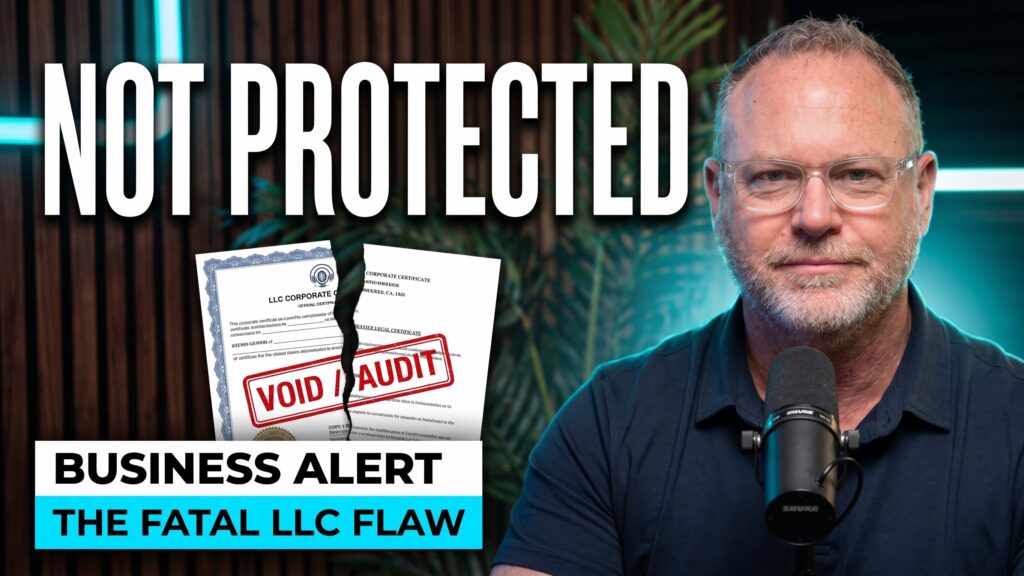
Starting and scaling a business involves financial risk, but failing to protect your personal assets can turn a routine business dispute into a catastrophic personal loss. On a recent episode of The Paycast Network, host Chase welcomed back business attorney and author Scott Reib to break down legal entity structuring, corporate maintenance, and asset protection strategies for entrepreneurs and payment professionals. Drawing from decades of experience advising businesses ranging from solo operators to large enterprises, Scott explains how limited liability companies work, why corporate formalities matter, and how to build a resilient foundation for long term growth.
The Foundation of the Limited Liability Company
The limited liability company, commonly known as an LLC, was created to provide a modern hybrid between a traditional partnership and a corporation. While traditional corporations require rigid bylaws, formal boards of directors, and extensive administrative oversight, the LLC offers operational flexibility while preserving vital liability protection. Under an LLC structure, the business entity itself enters into contracts, incurs debt, and carries operational liability. If the company defaults on an agreement or faces negligence claims, the business assets are exposed, but the owners personal assets remain shielded from lawsuits. Forming an LLC with the state secretary of state via articles of organization or a certificate of formation is only the initial step; owners must also establish whether the entity will be member managed by the owners themselves or manager managed by designated leadership. Beyond liability defense, an LLC also unlocks tax planning opportunities, allowing business owners to legitimately deduct operating expenses and run side ventures with greater clarity.
Siloing Assets Through Holding Companies and Real Estate
As an entrepreneur expands from an individual independent contractor into running a full sales organization or multiple ventures, a single LLC is often no longer enough. Scott advocates for a strategy known as siloing, drawing an analogy to grain silos on a farm. On an agricultural property, different grains are stored in distinct silos so that if one batch spoils, it does not contaminate the rest. The same principle applies to commercial ventures. By establishing a parent holding company at the top of the corporate hierarchy, business owners can separate distinct operations into individual subsidiaries. The holding company conducts internal business exclusively with the owner or family, avoiding direct client contracts and consumer exposure. Meanwhile, operating entities such as a payment sales office or commercial real estate investments sit in separate subsidiary LLCs beneath it. If a slip and fall lawsuit or vendor breach impacts the sales office, creditors cannot reach the valuable real estate held in a separate legal silo.
Maintaining the Corporate Veil Through Rigorous Governance
Filing paperwork with the state does not guarantee ongoing legal protection. To ensure courts and the Internal Revenue Service respect the business as an independent legal entity rather than an alter ego or sham, companies must adhere to internal formalities. Every LLC requires a comprehensive operating agreement defining voting rights, decision making authority, and procedures for hiring or replacing managers. Additionally, owners must officially adopt the entity through initial organizational consents or meeting minutes. Scott emphasizes that even single owner businesses should hold at least an annual meeting, documenting major decisions, revenue updates, and operational changes in a formal corporate minute book. When tax authorities conduct an audit, they routinely request corporate records to confirm the entity operates properly. Failing to keep annual reports current with the state can cause a charter to be administratively forfeited, stripping the company of its ability to defend itself in court and exposing the owner to personal liability for corporate contracts.
The Costly Danger of Neglected Registered Agents
One of the most dangerous administrative oversights occurs when business owners fail to maintain a reliable registered agent. The registered agent serves as the official point of contact for legal notices, regulatory alerts, and service of process for lawsuits. While individuals often list themselves or an early accountant as the registered agent, addresses frequently become outdated after office moves or professional transitions. If a lawsuit notice is served to a disconnected address or an indifferent former accountant, the business may never receive notification of the pending court date. This can result in a catastrophic default judgment where the court awards the plaintiff full damages without the business ever presenting a defense. Scott recounts real cases where clients discovered massive half million dollar default judgments only after law enforcement arrived to seize job site equipment, all because an old accountant failed to forward court notices. Utilizing professional registered agent services ensures legal notices are logged, tracked, and delivered instantly, protecting the company from surprise defaults.
Building Your Circle of Key Professional Advisors
Sustainable business growth relies on surrounding yourself with a dedicated circle of trusted advisors rather than trying to navigate complex legal, tax, and financial terrain alone. Scott outlines five essential professional relationships every entrepreneur must cultivate: an attorney to structure agreements and maintain compliance, a strategic accountant to optimize tax obligations, an insurance agent to provide liability coverage and fund legal defenses, a relationship banker to support capital needs and lines of credit, and an experienced business coach to accelerate the learning curve. Maintaining regular communication with these advisors ensures routine corporate requirements are never overlooked. Furthermore, when planning for a future business sale or exit, setting up manager managed entities with distinct brand names creates transferable enterprise value, provides privacy, and ensures a seamless transaction when the time comes to sell.